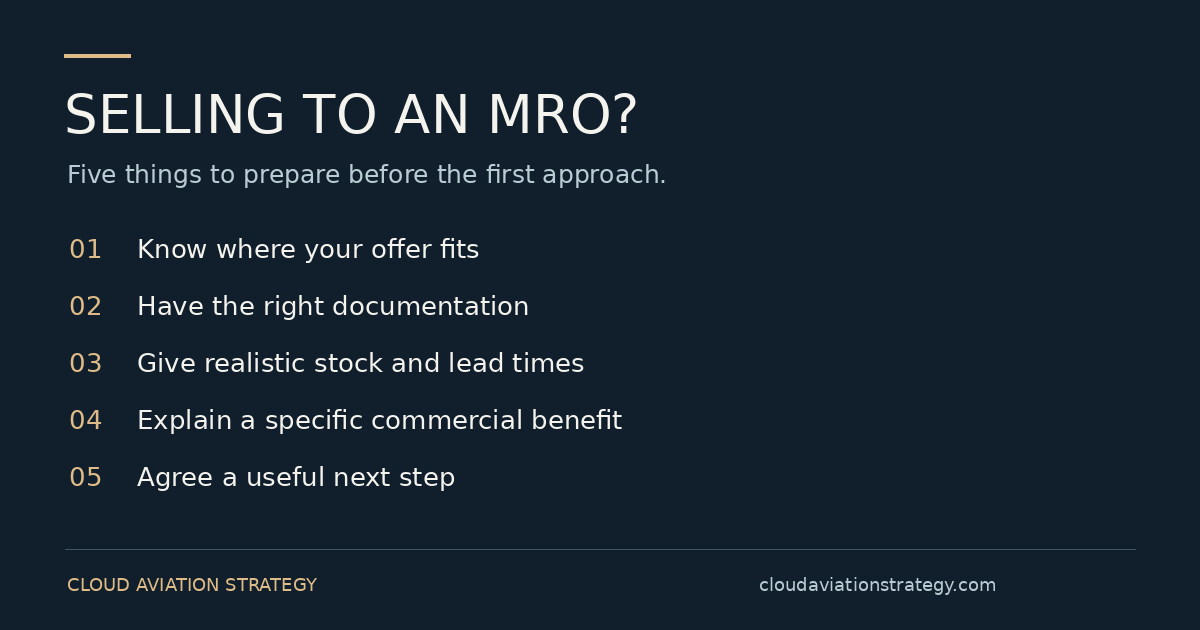
Before contacting an aircraft maintenance business, make sure you can answer one question clearly: why should they consider another supplier?
A catalogue introduces your range. The first conversation needs to explain where you fit and what you can reliably deliver.
1. Know which operation you can support
An engine shop, a component repair facility and a line maintenance operation have different requirements. Be specific about the activity you support. Identify the relevant product category and the people who evaluate it, including procurement and technical or quality teams where appropriate.
“We supply aviation consumables” is a broad introduction. “We can support this product category, with stock in this location and these delivery terms” gives the buyer something to work with.
2. Have the applicable documentation ready
Check what the buyer requires for your product or service. That may include quality certificates, technical information, release documentation, traceability records or safety data sheets. Requirements vary with the item and the order; do not assume that one certificate covers everything.
Know what you can provide before making a commitment, and identify any supplier qualification or technical acceptance steps early.
3. Be honest about stock and lead times
If you say an item is available, explain where it is stocked, whether it is allocated, and when it can actually be dispatched. Make minimum order quantities, remaining shelf life where relevant, freight arrangements and delivery terms clear.
If the lead time is six weeks, say six weeks. Also explain what support you can offer when a requirement becomes urgent.
4. Give the buyer a specific reason to consider you
“Competitive prices and excellent service” could describe almost any supplier. Explain the benefit in terms the customer can assess: dependable availability, shorter delivery times, smaller order quantities, relevant technical support or simpler ordering.
If you claim that your offer will reduce cost or save time, be ready to show the assumptions behind it.
5. Ask for a realistic next step
A first conversation does not have to end with an order. A useful outcome could be confirmation of a requirement, a technical discussion, a supplier assessment or an invitation to quote for a defined need.
A trial may be appropriate for some offers, subject to the necessary approvals and acceptance processes. Agree what can happen next, who needs to be involved and what information they need.
Make your offer easy to assess
Before sending the introduction, check whether your message answers four questions: what do you supply, where does it fit, what can you commit to, and why is it worth discussing?
That is a more useful starting point than sending the same presentation to every contact.
Cloud Aviation Strategy helps aviation suppliers prepare their commercial approach, explore new markets and develop customer relationships. Discuss your next opportunity ↗